
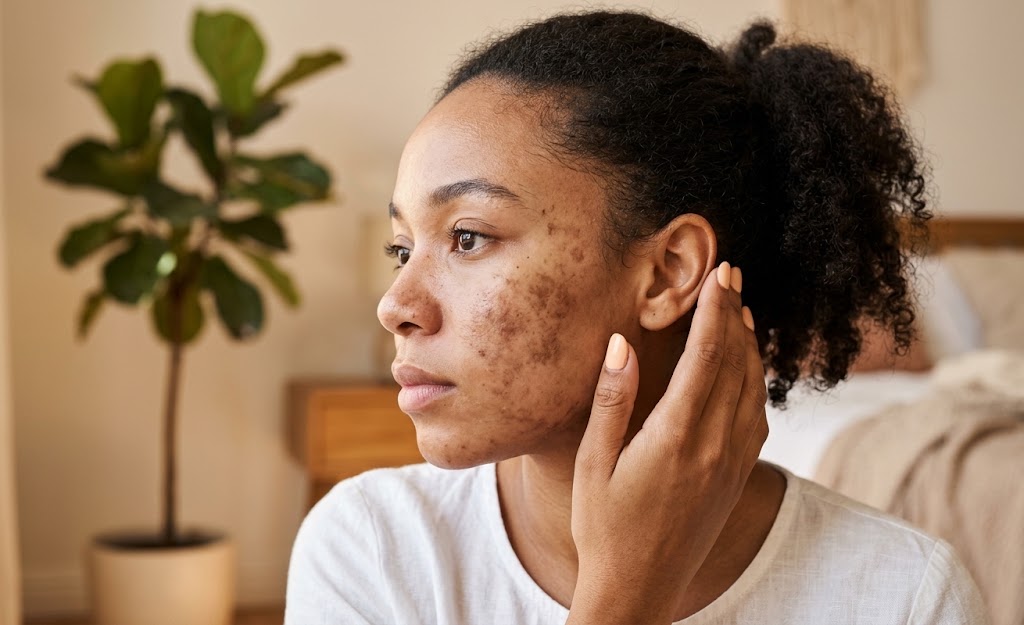
Why acne happens
- Cause
- Clogged follicles, oil, bacteria, inflammation
- Common in women
- Hormonal flares along the jaw and chin
- Proven treatments
- Retinoids, benzoyl peroxide, antibiotics, hormonal options
- Results take
- About 6–12 weeks
Acne develops when hair follicles become clogged with oil and dead skin cells. Bacteria and inflammation turn those clogs into blackheads, whiteheads, red bumps and deeper cysts.
In adult women, hormones often play a big role. Breakouts may flare before periods and tend to appear along the jawline, chin and neck. Conditions like polycystic ovary syndrome (PCOS) can also contribute.
Types of acne
Non-inflamed
- Blackheads
- Whiteheads
Inflamed
- Red bumps (papules)
- Pus-filled pimples (pustules)
Severe
- Deep, painful nodules or cysts
- Acne that leaves scars or dark marks
NoteAcne with irregular periods, excess facial or body hair, or thinning scalp hair may point to PCOS or another hormonal condition worth evaluating.
What can make acne worse
- Hormonal changes
- Menstrual cycles and PCOS.
- Heavy or oily products
- Look for products labeled noncomedogenic.
- Friction and pressure
- From phones, helmets, masks or touching your face.
- Some medications
- Including certain steroids and hormonal treatments.
- Stress
- Can trigger flares in some people.
Treating acne
Dermatology guidelines strongly recommend combining treatments that work in different ways. Most people start with topical treatment, adding oral medicine for moderate to severe acne.
| Topical retinoids | Unclog pores and prevent new breakouts. |
|---|---|
| Benzoyl peroxide | Kills acne bacteria and helps prevent antibiotic resistance |
Some acne treatments aren't right for everyone. Tell your provider about your full health history.
Skin care that supports treatment
- Wash twice a day with a gentle cleanser
- Use noncomedogenic moisturizer and sunscreen
- Don't pick or squeeze pimples
- Give treatments 6–12 weeks to work before judging results
Is an online acne visit right for you?
Online care is often a good fit if you:
- Have acne that hasn't improved with over-the-counter products
- Have hormonal breakouts around your period
- Want to discuss prescription options
A dermatologist may be best if you:
- Have severe, cystic or scarring acne
How PulseCareMD can help
A PulseCareMD visit lets a licensed provider review your skin, history and goals and recommend a treatment plan. Your visit fee covers the consultation.
Tell us about your skin
Describe your breakouts, what you've tried and your cycle.
A provider reviews it
A licensed provider considers your skin and health history before recommending treatment. Many visits are reviewed within 2–3 hours.
Get your plan
Your provider will explain your treatment plan, plus a skin care routine.
Frequently asked questions
When to get prompt care
Contact a provider promptly if you have:
- Painful, swollen cysts with fever
- A sudden, severe acne flare after starting a new medicine
- Mood changes while taking acne medicine