
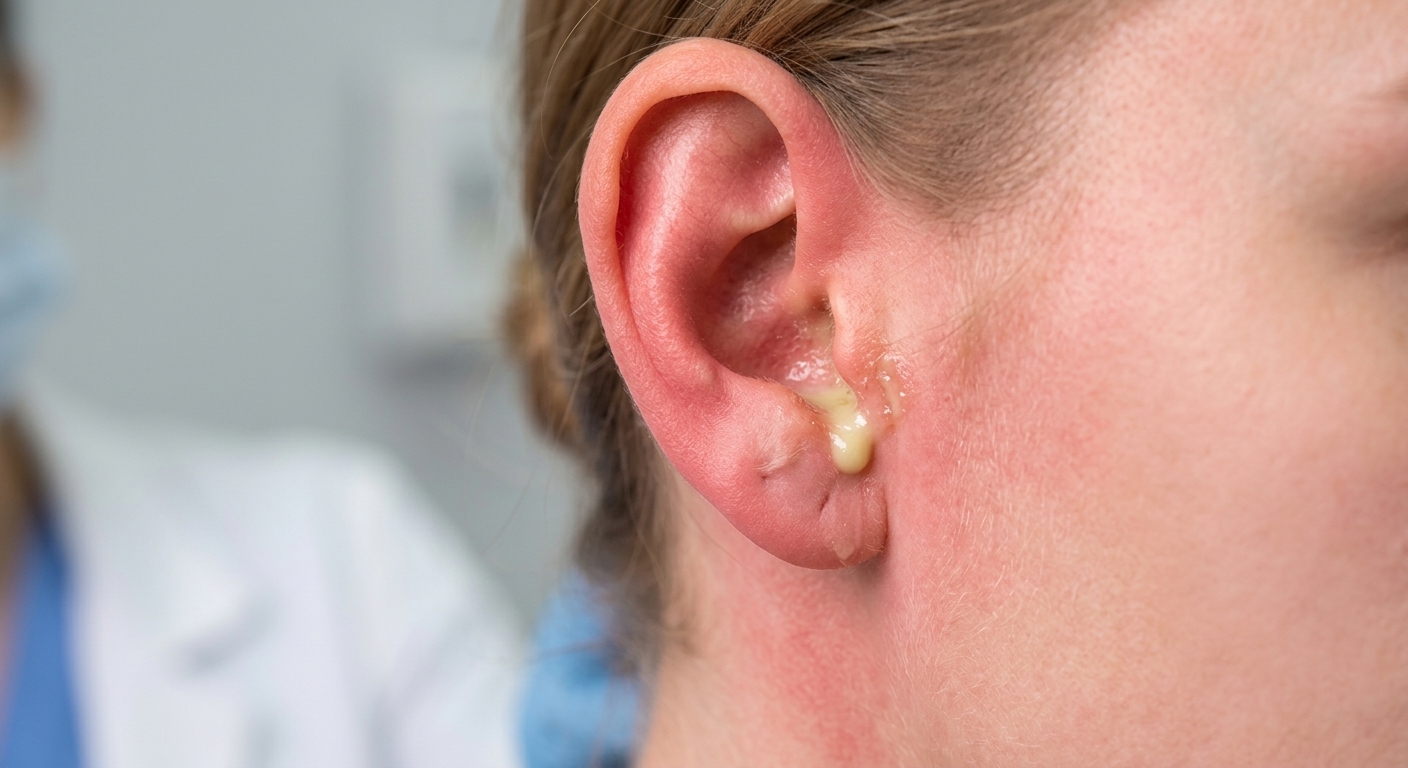
Understanding ear infections
- Two main types
- Outer ear (swimmer's ear) and middle ear
- Swimmer's ear treated with
- Antibiotic ear drops
- Middle ear infection
- Sometimes oral antibiotics
- Pain relief
- Acetaminophen or ibuprofen
Swimmer's ear (otitis externa) is an infection of the skin lining the ear canal, often after water gets trapped or the canal is scratched by cotton swabs or earbuds.
A middle ear infection (otitis media) happens behind the eardrum, usually after a cold or allergies cause fluid to build up. It's much more common in children but does occur in adults.
Swimmer's ear or middle ear infection?
| Feature | Swimmer's ear | Middle ear infection |
|---|---|---|
| Where it hurts | The ear canal; worse when you tug the ear | Deep inside the ear |
| Common trigger | Water exposure, cotton swabs, earbuds | A recent cold, sinus problems or allergies |
| Other signs | Itching, swelling, discharge from the canal | Pressure, muffled hearing, sometimes fever |
| Usual treatment | Antibiotic ear drops | Pain relief; antibiotics when needed |
NoteA provider can't look inside your ear in an online visit, so if your symptoms are unclear or severe, an in-person ear exam may be recommended.
Ear infection symptoms
You may notice:
- Ear pain, from dull to sharp
- A feeling of fullness or pressure
- Muffled hearing
- Itching or swelling in the ear canal
- Fluid or discharge draining from the ear
- Fever, especially with middle ear infections
Get urgent in-person care if you have
These can signal a spreading or serious infection:
- Redness, swelling or pain behind the ear
- Weakness or drooping of the face
- Severe headache, stiff neck or confusion
- Sudden hearing loss or severe dizziness
Treating ear infections
Swimmer's ear is best treated with antibiotic ear drops, which work better than pills for this type of infection. Middle ear infections in adults may need antibiotics when a bacterial infection is likely.
Easing ear pain
- Acetaminophen or ibuprofen for pain, if they're safe for you
- A warm compress held against the ear
- Keep the ear dry while it heals, and avoid swimming
- Don't put cotton swabs or other objects in your ear
- If you have drainage from the ear, tell your provider, because some ear drops aren't safe with a torn eardrum
Is an online ear visit right for you?
Online care is often a good fit if you:
- Have ear pain after swimming or water exposure
- Have ear pressure or pain after a cold
- Have mild to moderate symptoms
Get in-person care if you:
- Have swelling behind the ear or facial weakness
- Have diabetes or a weakened immune system with severe ear pain
- Have symptoms that haven't improved after 2–3 days of treatment
How PulseCareMD can help
A PulseCareMD visit lets a licensed provider review your ear symptoms and recommend treatment, or tell you if you need an in-person exam. Your visit fee covers the consultation.
Describe your symptoms
Tell us where it hurts, what triggered it and whether there's drainage.
A provider reviews it
A licensed provider works out whether it's swimmer's ear or a middle ear infection. Many visits are reviewed within 2–3 hours.
Get your care plan
Your provider will explain your treatment plan.
Preventing ear infections
A few habits help protect your ears:
Dry your ears after swimming
Tilt your head to drain water and dry the outer ear gently.
Skip the cotton swabs
They can scratch the canal and push wax deeper.
Keep earbuds clean
Clean them regularly and give your ears breaks.
Manage allergies and colds
Reducing congestion helps the middle ear drain.
Frequently asked questions
When to get emergency care
Go to the nearest emergency room if you have:
- Swelling and redness behind the ear
- Facial weakness or drooping
- Severe headache with stiff neck or confusion
- High fever with severe ear pain