
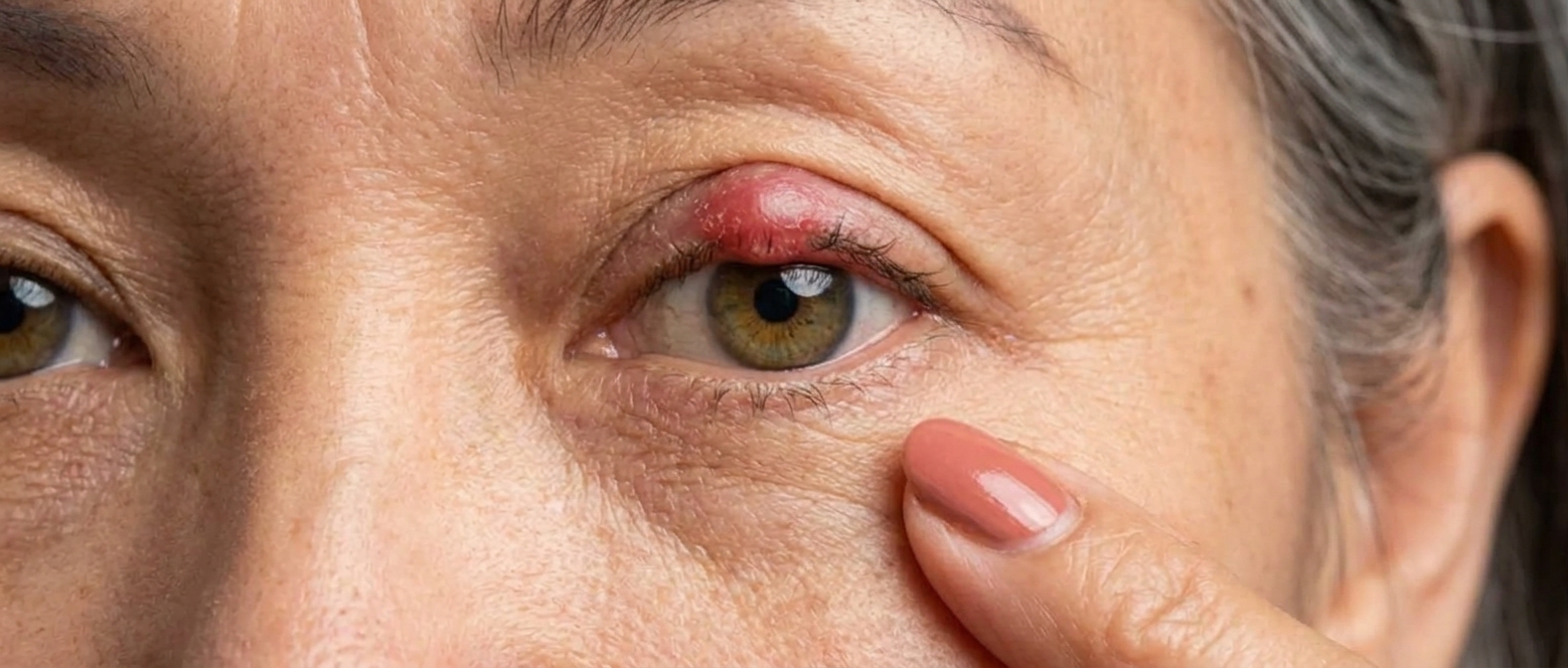
What is a stye?
- Cause
- Bacterial infection of an eyelid gland
- Usually clears
- Within about a week
- Best treatment
- Warm compresses
- Antibiotics
- Usually not needed
A stye (hordeolum) is a small infection of an oil gland or eyelash follicle on the eyelid, usually caused by staph bacteria that normally live on the skin.
It's often confused with a chalazion, a blocked oil gland that's usually painless and sits further back on the lid. Both often respond to the same home care.
Stye symptoms
A stye usually causes:
- A red, tender bump on the edge of the eyelid
- Swelling of the eyelid
- A yellow spot at the center as it comes to a head
- A gritty or scratchy feeling in the eye
- Watery eye
- Crusting along the lid
Get prompt care if you have
These can mean the infection is spreading:
- Swelling or redness spreading across the whole eyelid or around the eye
- Fever
- Changes in your vision
- Pain when moving your eye
Treating a stye
Most styes drain and heal on their own. Warm compresses help them come to a head and drain sooner. Antibiotics are usually only needed if the infection spreads beyond the stye.
Home care that helps
- Apply a clean, warm compress for 10–15 minutes, several times a day
- Gently massage the area afterward
- Keep the eyelid clean with a mild, tear-free cleanser
- Don't squeeze or pop the stye
- Skip eye makeup and contact lenses until it heals
- Contact a provider if it isn't improving after 1–2 weeks
Is an online stye visit right for you?
Online care is often a good fit if you:
- Have a tender bump on your eyelid
- Want to confirm it's a stye and get home care advice
- Have a stye that isn't improving with warm compresses
See a provider in person if you:
- Have swelling spreading around the eye, or fever
- Have vision changes
- Have a bump that keeps returning in the same place
How PulseCareMD can help
A PulseCareMD visit lets a licensed provider review your symptoms, confirm the best home care and decide whether treatment is needed. Your visit fee covers the consultation.
Describe your symptoms
Tell us where the bump is, how long you've had it and what you've tried.
A provider reviews it
A licensed provider confirms it looks like a stye and checks for spreading infection. Many visits are reviewed within 2–3 hours.
Get your care plan
Home care guidance, or a treatment plan from your provider if appropriate.
Frequently asked questions
When to get urgent care
Go to an emergency room or see an eye doctor right away if you have:
- Swelling and redness spreading around the eye with fever
- Pain when moving the eye
- Vision loss or double vision