
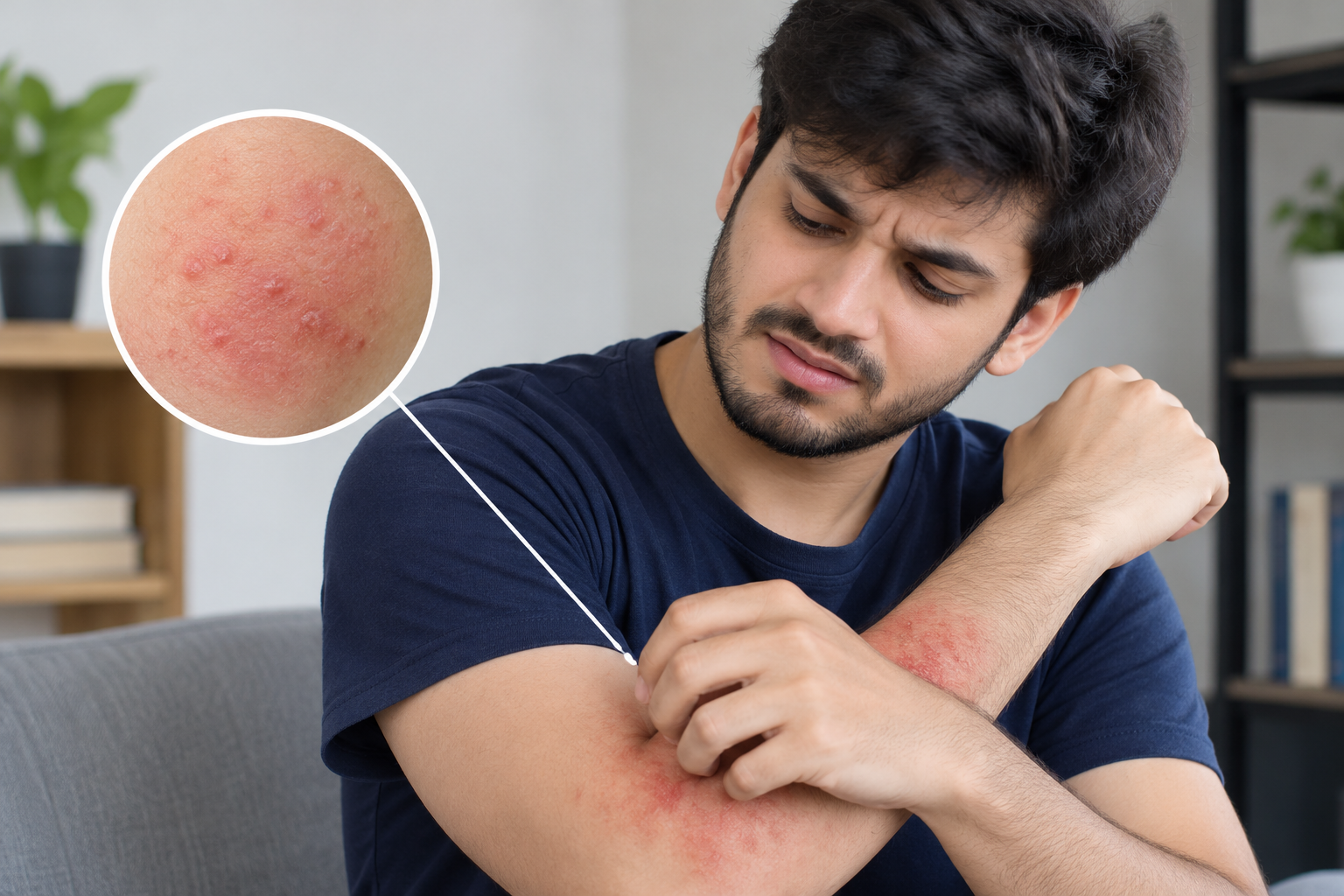
Understanding skin rashes
- Common causes
- Irritants, allergies, infections, heat
- Key clues
- Location, timing, itch versus pain
- Often treated with
- Avoiding triggers, creams, antihistamines
- Urgent if
- With fever, blistering or trouble breathing
Any area where skin changes color or texture, turning red, bumpy, blistered or scaly, counts as a rash. Many rashes itch or burn. On darker skin, rashes may look purple, brown or gray rather than red.
Rashes have many causes, and the pattern matters: where it started, how it spread, whether it itches or hurts, and what you were exposed to beforehand. Those details help a provider narrow it down.
Common types of rashes
| Feature | What it looks like | Typical cause |
|---|---|---|
| Contact dermatitis | Itchy red patches or blisters where skin touched something | Poison ivy, nickel, fragrances, soaps |
| Hives | Raised, itchy welts that come and go within hours | Allergies, infections, medicines, stress |
| Eczema | Dry, itchy, scaly patches that flare | A skin barrier problem with triggers |
| Fungal rash | Red ring with a scaly edge, often in skin folds | Ringworm, jock itch, yeast |
| Heat rash | Tiny itchy bumps in sweaty areas | Blocked sweat glands |
| Shingles | Painful blisters in a band on one side of the body | Reactivated chickenpox virus |
Rashes that need urgent attention
Most rashes aren't dangerous, but some need prompt care:
- A rash with fever
- Painful blisters or peeling skin
- A rash that spreads very quickly
- Purple or dark spots that don't fade when pressed
- A rash near the eyes
- A rash after starting a new medicine
Call 911 if a rash comes with
These can signal a severe allergic reaction:
- Swelling of the lips, tongue or throat
- Trouble breathing or swallowing
- Dizziness or fainting
Treating a rash
Treatment depends on the cause. Removing a trigger often lets the skin heal. Steroid creams calm allergic and irritant rashes, antifungal creams treat fungal rashes, antihistamines help hives, and antiviral medicine treats shingles when started early.
Soothing itchy skin
- Stop using any new soap, lotion, detergent or product that may be the trigger
- Apply cool compresses
- Use a fragrance-free moisturizer
- Take an oral antihistamine for itching or hives, if it's safe for you
- Avoid scratching. Keep nails short.
- Don't use steroid creams on a rash that might be fungal until it's been assessed
Is an online rash visit right for you?
Online care is often a good fit if you:
- Have an itchy rash without fever
- Think you reacted to a plant, product or material
- Have hives that come and go
Get in-person care if you:
- Have a rash with fever or feel unwell
- Have widespread blistering or peeling
- Have a rash that's spreading fast or near your eyes
How PulseCareMD can help
A PulseCareMD visit lets a licensed provider review your rash, its pattern and possible triggers, and recommend treatment. Your visit fee covers the consultation.
Describe your rash
Tell us where it is, how it started, how it feels and what you were exposed to.
A provider reviews it
A licensed provider uses the pattern and triggers you describe to narrow down the cause. Many visits are reviewed within 2–3 hours.
Get your care plan
Ways to calm the itch, or a treatment plan if needed.
Frequently asked questions
When to get emergency care
Call 911 or go to the nearest emergency room if you have:
- Swelling of the face, lips or throat, or trouble breathing
- A rash with high fever and feeling very unwell
- Widespread blistering or peeling skin
- Purple spots that don't fade when pressed, with fever