
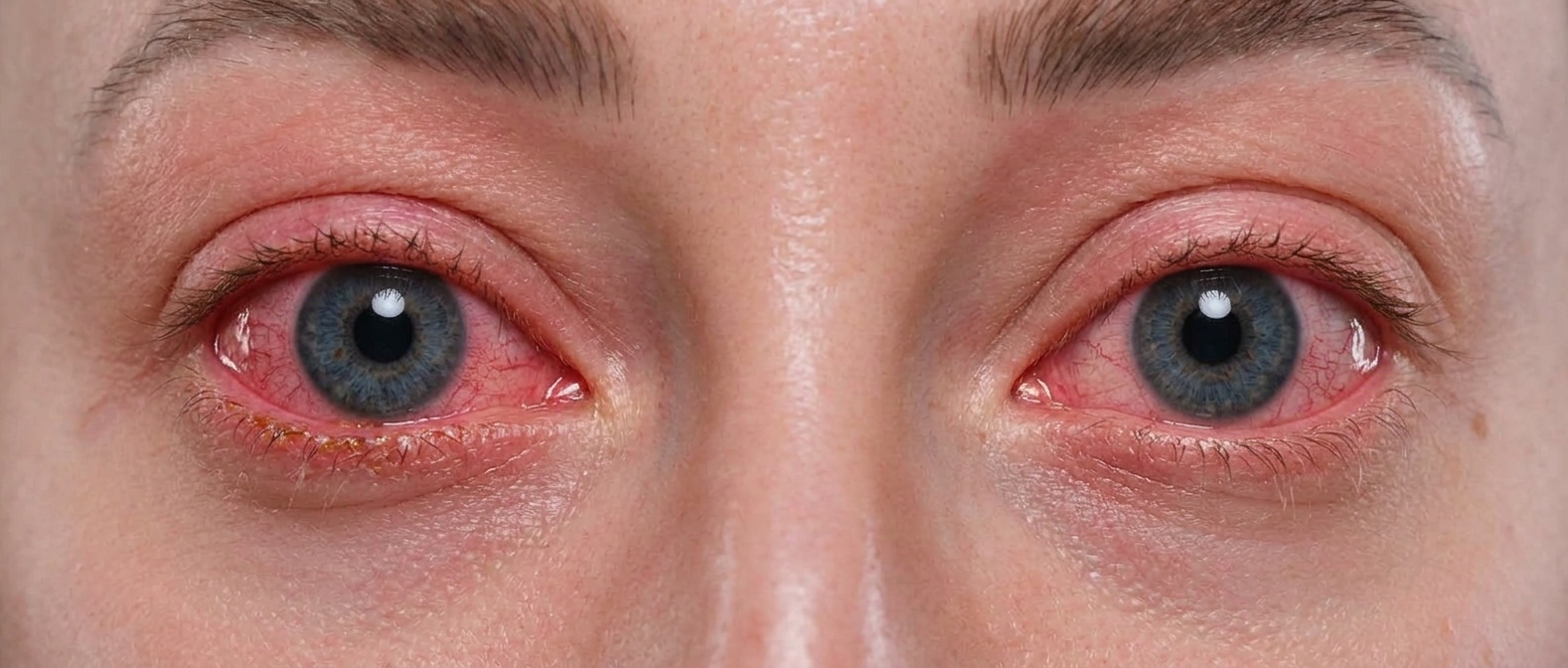
What is pink eye?
- Most common types
- Viral, bacterial and allergic
- Contagious?
- Viral and bacterial types, yes
- Antibiotic drops help
- Only bacterial pink eye
- Contact lens wearers
- Need extra caution
Pink eye (conjunctivitis) is inflammation of the thin, clear layer covering the white of the eye and the inside of the eyelids. It makes the eye look pink or red.
Viruses, bacteria and allergens are the most common causes. Viral and bacterial pink eye are very contagious; allergic pink eye is not. Most cases are mild and don't harm vision.
Viral, bacterial or allergic?
| Feature | Viral | Bacterial | Allergic |
|---|---|---|---|
| Discharge | Watery | Thick, yellow-green; lids may stick together | Watery |
| Itching | Mild | Mild | Intense |
| Eyes affected | Often starts in one, spreads to both | One or both | Usually both |
| Other clues | Cold symptoms | Crusting in the morning | Sneezing, runny nose, seasonal pattern |
| Treatment | Comfort care; clears on its own | Antibiotic drops | Allergy eye drops |
Pink eye symptoms
Common symptoms include:
- Pink or red color in the white of the eye
- Watery eyes
- Itching, burning or a gritty feeling
- Discharge or crusting, especially after sleep
- Swollen eyelids
- Contact lenses that feel uncomfortable
See an eye doctor promptly if you have
These can signal a more serious eye problem than pink eye:
- Eye pain, not just irritation
- Sensitivity to light
- Blurred vision that doesn't clear when you blink
- Symptoms while wearing contact lenses
Treating pink eye
Viral pink eye usually clears on its own within one to two weeks; antibiotic drops won't help. Bacterial pink eye often improves faster with antibiotic drops. Allergic pink eye responds to antihistamine eye drops and avoiding triggers.
Comfort and care at home
- Use a cool or warm compress on closed eyes
- Lubricating eye drops (artificial tears) can soothe irritation
- Gently clean discharge with a clean, damp cloth from the inner to outer corner
- Stop wearing contact lenses until your eyes are clear, and replace the lenses and case
- Don't share towels, pillowcases or eye makeup, and throw out makeup used while infected
Is an online pink eye visit right for you?
Online care is often a good fit if you:
- Have red, itchy or crusty eyes without pain
- Have clear vision
- Have allergy-related eye symptoms
See an eye doctor in person if you:
- Wear contact lenses and have a red, painful eye
- Have eye pain, light sensitivity or blurred vision
- Have a weakened immune system, or symptoms that aren't improving
How PulseCareMD can help
A PulseCareMD visit lets a licensed provider review your eye symptoms, work out the likely type of pink eye and recommend treatment, or tell you if you need an eye exam. Your visit fee covers the consultation.
Describe your symptoms
Tell us about redness, discharge, itching and whether you wear contacts.
A provider reviews it
A licensed provider decides whether your pink eye looks viral, bacterial or allergic. Many visits are reviewed within 2–3 hours.
Get your care plan
Your provider will explain your treatment plan, plus advice on returning to work or school.
Stopping the spread
Viral and bacterial pink eye spread easily. These steps help:
Wash your hands often
Especially after touching your eyes.
Don't touch or rub your eyes
It spreads germs to the other eye and to others.
Use your own towels
And change pillowcases often while infected.
Follow contact lens hygiene
Clean and store lenses as directed, and never sleep in them unless prescribed.
Frequently asked questions
When to get urgent eye care
See an eye doctor or go to an emergency room right away if you have:
- Severe eye pain
- Sudden vision loss or blurring
- An eye injury or chemical splash
- Intense redness with light sensitivity, especially with contact lenses