
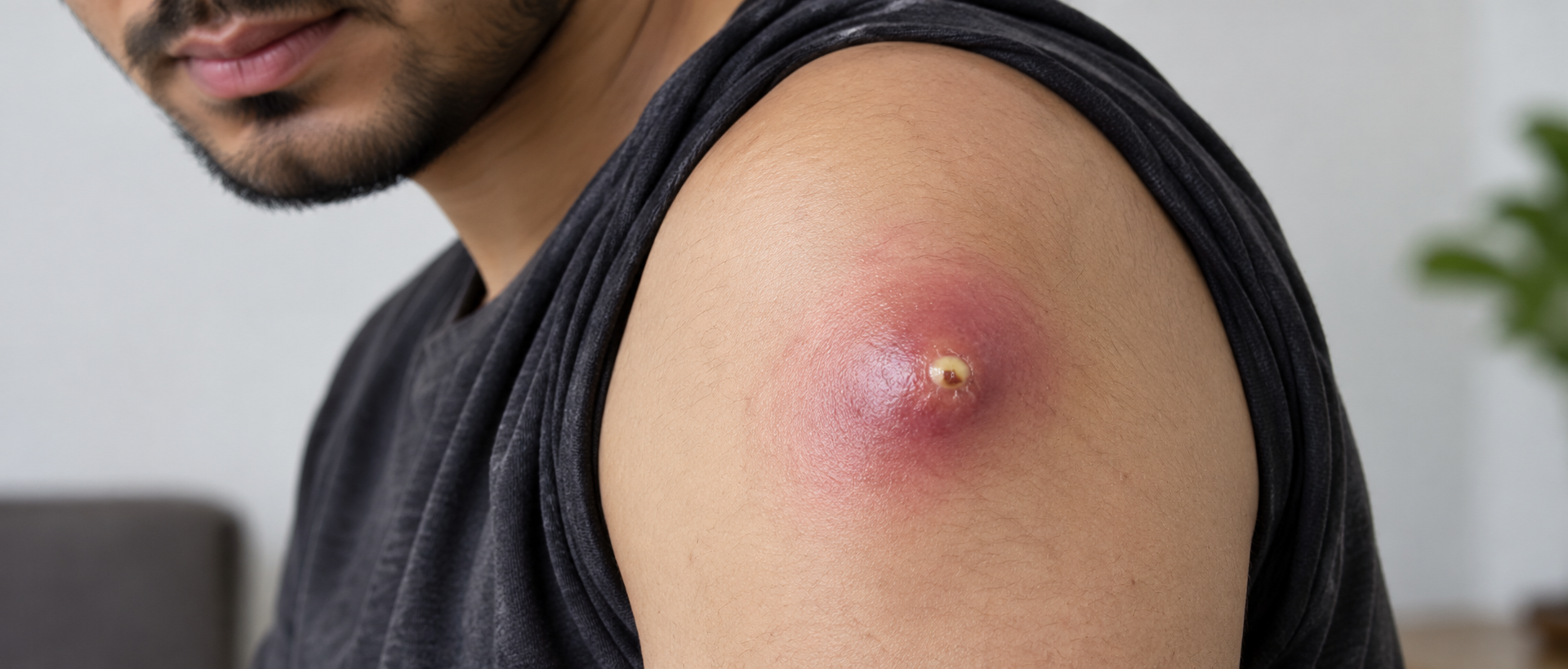
What is a boil?
- Cause
- Bacterial infection of a hair follicle
- Small boils
- Often drain and heal with warm compresses
- Larger abscesses
- Usually need draining by a clinician
- Antibiotics
- Needed in some cases
A boil (furuncle) is a skin abscess, a pocket of pus that forms when bacteria, usually Staphylococcus aureus, infect a hair follicle. Several boils joined together are called a carbuncle.
Boils often appear in areas with hair and friction, such as the armpits, groin, buttocks, thighs and neck. Some are caused by MRSA, a type of staph that's resistant to some antibiotics.
Boil symptoms
A boil usually develops over a few days:
- A red, tender lump under the skin
- Increasing swelling and pain
- A white or yellow center as pus collects
- Drainage of pus when it opens
- Warm skin around the lump
Get in-person care soon if you have
These are signs the infection needs more than home care:
- Fever or chills
- Red streaks or spreading redness around the boil
- A boil larger than about 2 inches, or very painful
- A boil on the face, spine or buttock crease
What makes boils more likely
- Close contact or shared items
- Staph spreads through skin contact and shared towels or razors.
- Skin damage
- Shaving, cuts and insect bites let bacteria in.
- Friction and sweat
- Tight clothing and warm, moist skin.
- Diabetes or a weakened immune system
- These make infections more likely and harder to clear.
- Previous boils
- Some people carry staph on their skin or in their nose.
Treating a boil
Small boils often come to a head and drain on their own with warm compresses. Larger abscesses usually need to be opened and drained by a clinician, which is the most important treatment. Antibiotics are added for larger abscesses, spreading redness, fever, or people at higher risk.
Caring for a boil at home
- Apply a warm, moist compress for 10–15 minutes several times a day
- Never squeeze, pop or cut a boil yourself
- Once it drains, keep it covered with a clean bandage
- Wash your hands after touching it, and don't share towels or razors
- Contact a provider if it isn't improving in a few days
Is an online visit right for your boil?
Online care can help if you:
- Have a small boil and want home-care advice
- Want to know whether it needs draining or antibiotics
- Have boils that keep coming back
You likely need in-person care if you:
- Have a large or very painful abscess that needs draining
- Have fever, chills or spreading redness
- Have a boil on your face or near your spine
How PulseCareMD can help
A PulseCareMD visit lets a licensed provider review your symptoms and decide whether home care, antibiotics or in-person draining is the right next step. Your visit fee covers the consultation.
Describe the boil
Tell us its size, location, how long you've had it and whether you have fever.
A provider reviews it
A licensed provider judges whether the lump can heal with home care or needs draining. Many visits are reviewed within 2–3 hours.
Get your care plan
Home care guidance, antibiotics if appropriate, or a referral for draining.
Frequently asked questions
When to get emergency care
Go to the nearest emergency room if you have:
- High fever or chills with a boil
- Rapidly spreading redness or red streaks
- A boil on the face with swelling near the eye
- Feeling very unwell or confused