
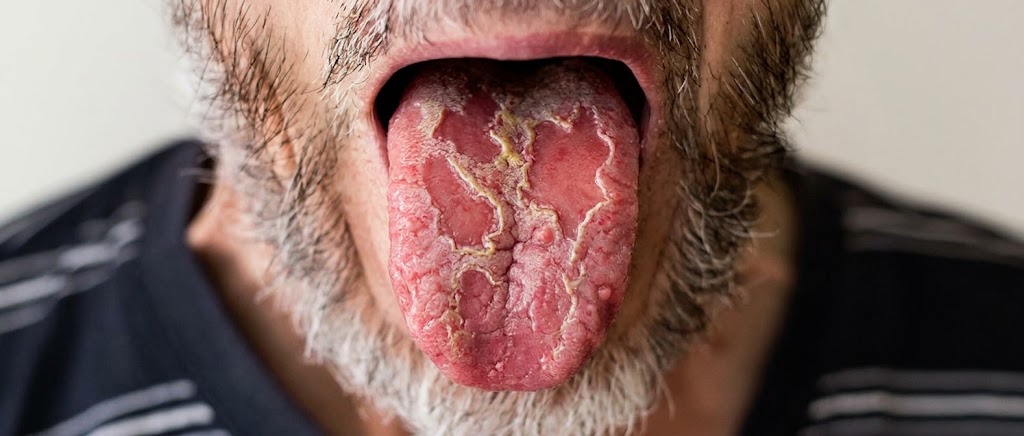
What is oral thrush?
- Cause
- Overgrowth of Candida yeast
- Main sign
- White patches that may wipe off
- Treatment
- Antifungal medicine
- Usually clears
- Within 1–2 weeks of treatment
Oral thrush is an overgrowth of Candida, a yeast that normally lives in small amounts in the mouth. When the balance shifts, it can coat the tongue, cheeks and throat.
Thrush is common in babies, older adults, denture wearers and people taking antibiotics or inhaled steroids. In healthy adults without an obvious trigger, it can be a sign of an underlying condition worth checking.
Oral thrush symptoms
Common signs include:
- Creamy white patches on the tongue, inner cheeks or roof of the mouth
- Redness or soreness, sometimes bleeding if patches are scraped
- A cottony feeling in the mouth
- Loss of taste
- Cracking and redness at the corners of the mouth
- Pain when eating or swallowing
Get seen in person if you have
These can mean the infection has spread or needs further evaluation:
- Pain or difficulty swallowing
- Thrush that keeps coming back
- Thrush with no obvious cause, especially with weight loss or frequent infections
What makes thrush more likely
- Antibiotics
- They disrupt the normal balance of bacteria and yeast.
- Inhaled steroids
- Used for asthma or COPD. Rinsing after use helps.
- Dentures
- Especially if they don't fit well or aren't cleaned and removed at night.
- Diabetes
- Higher sugar levels in saliva feed yeast.
- Dry mouth
- From medications or medical conditions.
- A weakened immune system
- From illness, chemotherapy or medications.
Treating oral thrush
Oral thrush is treated with antifungal medicine applied in the mouth or taken by mouth, usually for 7–14 days.
| Antifungal treatment | Your provider will recommend the right option |
|---|
Your provider will choose based on severity, other medications and your health history.
Helping it heal
- Rinse your mouth with water after using an inhaled steroid
- Clean dentures daily and take them out at night
- Brush your teeth and tongue gently twice a day
- Eat soft, cool foods if your mouth is sore
Is an online thrush visit right for you?
Online care is often a good fit if you:
- Have white patches after antibiotics or inhaler use
- Wear dentures and have mouth soreness
- Have had thrush before and recognize it
Get in-person care if you:
- Have pain or trouble swallowing
- Have thrush that keeps returning
- Have a weakened immune system
How PulseCareMD can help
A PulseCareMD visit lets a licensed provider review your symptoms and possible triggers and recommend antifungal treatment. Your visit fee covers the consultation.
Describe your symptoms
Tell us what you see in your mouth, when it started and about recent medicines.
A provider reviews it
A licensed provider looks for triggers such as antibiotics, inhalers or dentures. Many visits are reviewed within 2–3 hours.
Get your treatment plan
A treatment plan from your provider if appropriate.
Frequently asked questions
When to get urgent care
Seek prompt in-person care if you have:
- Severe pain or inability to swallow
- Fever with mouth sores
- Signs of dehydration, such as very little urine